
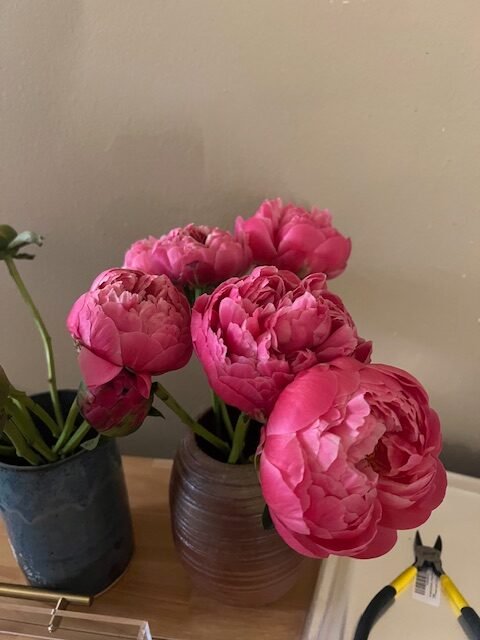
One of the things I love about flower preservation is that no two flowers are exactly alike. Even when flowers come from the same variety, shipment, or order, they can have surprisingly different appearances once they are preserved.
I wanted to share an example using peonies from the same case to show just how much a flower's journey before preservation can influence its final appearance.
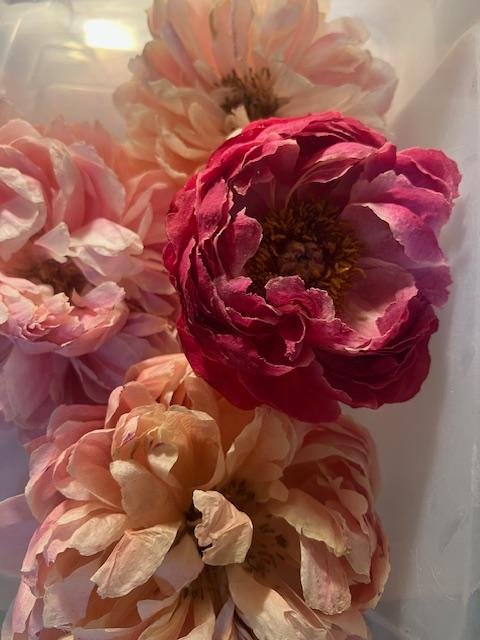
The Same Flowers, Two Very Different Colors
The photo above shows peonies from the same case, but there is a noticeable difference in their coloring.
The deep pink peony was picked up from my wholesale florist and preserved within 48 hours. The lighter peach and blush-colored peonies, however, had been stored in a cooler for approximately a week before being brought out and allowed to open. I then preserved those flowers using the exact same preservation process.
Despite being the same variety, their final colors are remarkably different.
The deeper pink peony retained much more of its original intensity, while the lighter peonies developed softer shades of blush, peach, and cream.
This is a good example of why flower preservation isn't always as predictable as we might hope. The timing, age, storage, and handling of flowers can all play a role in how they look when they are finally preserved.
Your Flowers Have Already Been on a Journey
When you order flowers for a wedding, memorial, bridal shower, or another special occasion, there is quite a bit that happens before they arrive in your hands.
Flowers are typically cut, shipped, and transported to a wholesale florist. From there, your florist picks them up, conditions them, and begins preparing your arrangements.
For weddings especially, this process can involve several additional steps. Florists may need to wire individual stems, reinforce flower heads, and make structural adjustments so a bouquet holds its shape throughout the day. Flowers may also spend time in coolers before they are arranged and delivered.
All of these steps are part of making your flowers beautiful and ensuring they are ready for your special occasion. However, they also mean that flowers may have different histories, even when they look identical when they arrive.
By the time your bouquet reaches me, each flower has already experienced its own combination of growing conditions, transportation, storage, handling, and time.
Why This Matters for Flower Preservation
One of the most important things to understand about flower preservation is that I am working with natural materials, not manufactured products.
I can use the same drying and preservation techniques on two flowers, but I cannot guarantee that they will retain the exact same color or appearance.
Some flowers retain their deeper, more saturated colors, while others soften into lighter shades. Petals may develop subtle variations in color, and flowers that originally looked nearly identical may take on completely different appearances after drying.
This is especially noticeable with peonies, roses, and other flowers that have multiple layers of petals and naturally varying shades.
Embracing the Natural Beauty of Your Flowers
I always want customers to understand that these variations are a normal part of working with real flowers. Sometimes the softer, more muted colors become a beautiful part of the finished piece. Other times, you may prefer a little more color correction to bring certain flowers closer to the appearance you remember.
Both are completely okay.
My goal is to preserve the flowers that hold meaning for you while creating something beautiful that you can enjoy for years to come. Whether that means embracing the natural changes that happen during preservation or making thoughtful color adjustments, I want the finished piece to feel special to you.
Your flowers have a story, and their appearance after preservation is part of that story.